About Me

My Photo
Ahmad Apriyanto
Graduate of Mathematics Education from Faculty of Education Universitas Siswa Bangsa Internasional (USBI), the transformation of Sampoerna School of Education (SSE) Jakarta.
View my complete profile

Calendar

Masehi HijriyahPerhitungan pada sistem konversi Masehi – Hijriah ini memungkinkan terjadi selisih H-1 atau H+1 dari tanggal seharusnya untuk tanggal Hijriyah

Showing posts with label History of Mathematics (HoM). Show all posts

Saturday, September 28, 2013

Summary on Numbers and Numeration System

Created by Ahmad Apriyanto, Iis Rosita, and Novi Handayani


        Natural number idea comes after human’s culture, a long time ago human use notches to mark weather exchange because at that time weather exchange was very useful to their life like hunting, farming and so on. Therefore, the idea of natural number was not invented by human but it comes from nature, nature have some pattern, then human realize that, after that to represent it they use tally marks or any other way to count, that was the idea of natural number. It also showed that the beginning step of mathematics was counting because at that time human using mathematics just for marks nature pattern or solve their own problems like time to hold religion ceremony, in other words they count it. Because of that, all of mathematical concept are relating to counting because counting is the basic of all mathematical concept. As Morris Klein said that counting exist in almost all branch of mathematics like probability, statistic, analysis, function, and topology.

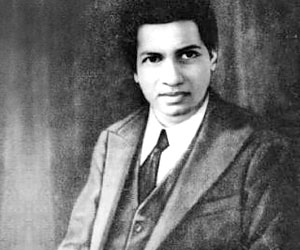
Historical Sketch Report Form of Srinivasa Ramanujan

Created by Ahmad Apriyanto, Novi Handayani, Iis Rosita 
picture source (click here)
Mathematician’s Name : Srinivasa Ramanujan (shree–ni–VA–sa   rah–MAH–nuh–jun)
Date of Birth : Desember 22nd, 1887
Place of Birth : Erode, India
Date of Death : April 26th, 1920
Place of Death : India
Three events in the mathematician’s life – date also if known
1.    Often winning Mathematics contest since he was child.
2.    In 1904, he received a merit scholarship in a local college and became more indulgent into mathematics. He lost his interest in all other subjects due to which he lost his scholarship. Even after two attempts, he did not succeed to get a first degree in the field of arts.
3.    In 1909, he married Srimathi Janaki and continued his clerical work and, side by side, his investigations of mathematics. Moreovere, there was someone who was supported their life – Ramanchadra Rao. He was often use scrap wrapping paper from his office to do calculations.
4.    In 1911, he published some of his results.
5.    In January 1913, he sent his paper to a Cambridge Professor named Godfrey Hardy but he did not appreciate Ramanujan’s work much as he had not really done reached the standard of the mathematicians of the west. But Rahmanujan was given a scholarship in May by the University of Madras.
6.    In the same time, Hardy offered Rahmanujan scholarship – all expenses paid – to study at Trinity College. After some reasons, he moved to England and sent his wife and his mother to a nearby town. He had to take care of his personal needs himself in England.
7.    He had dilemma in choosing the offered scholarship from Hardy or the scholarship of University of Madras because of his religion – Hindu, he was a Brahmin caste.
8.    Ramanujan went to Cambridge in 1914 and it helped him a lot but by that time his mind worked on the patterns on which it had worked before and he seldom adopted new ways. He and Hardy collaborated on many articles and published in Europan journal.
9.    He got elected as the fellow in 1918 at the Trinity College at Cambridge & the Royal Society.
10.     After 3 years in England, he became sick – a mysterious ill – and after 6 years in England he decided to go back to India. A year after, he died because of the ilness.
Three accomplishments in mathematics
1.    He was very well known for his efforts on continued fractions and series of hypergeometry.
2.    When he was thirteen, he could work out Loney’s Trigonometry exercises without any help.
3.    At the of fourteen, he was able to acquire the theorems of cosine and sine given by L. Euler.
4.    In 1903, he had a book – Synopsis of Elementary Results in Pure and Applied Mathematics by George Shoobridge Carr – it helped him a lot and opened new dimensions to him which helped him introduce about 6,165 theorems for himself.
5.    Rahmanujan and Hardy’s project was called partitioning. They found out how many ways an integer can be expressed as the sum of others integers. For example, the number 4 can be expressed as the sum of 1+3, 1+1+2, 1+1+1+1, 2+2, and 4 itself, for a total of 5 ways. Finally, they came out with the formula of partitioning the large numbers.
6.    Discovering simple but accurate ways of approximating the value of pi. Archimedes and Newton made significant progress on it, but high-speed computers could not calculate pi to the accuracy of million decimal places without using Rahmanujan’s formula

Three facts of  interest your mathematicians
1.    He learned mathematics by himself without any guidance since he was child and often won mathematics contest.
2.    He was so confident since he was child and wanted to be famous someday.
3.    He had a unique way of making complex problems simpler.
Sources
R. Luetta & R. Wilbert. (1990). Mathematicians Are People, Too. USA: Dale Seymour Publication
http://www.famousscientists.org/srinivasa-ramanujan/

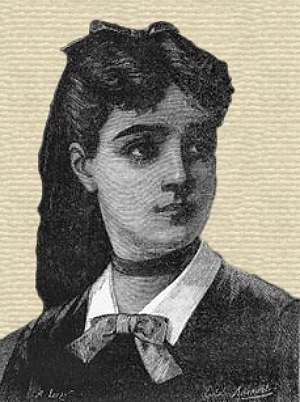
Historical Sketch Report Form of Sophie Germain


Created by Ahmad Apriyanto, Novi Handayani, Iis Rosita 
picture source (click here)
Mathematician’s Name : Sophie Germain (so–FEE   zhair–MAN)
Date of Birth : April 1st, 1776
Place of Birth : French
Date of Death : Juni 27th, 1831
Place of Death : French
The events in the mathematician’s life – date also if known
1.    When she was children, her parents didn’t allow her to learn mathematics
2.    She was very interested in Archimedes’ amazing invention
3.    When she was 18, she pretended to be a man with the name of Monsieour LeBlanc to study because at that time woman didn’t allow to learn in college. She liked become students of Lagrange
4.    Sophie died because of breast cancer
The accomplishments in mathematics
1.    In 1816 , she won grand prize from the french academy for her work on the law of vibrating elastic surfaces
2.    Germain used this result to prove the first case of Fermat's Last Theorem for all odd primes p<100
3.    Germain made the Fermet’s theory become the shopisticated one. Germain proved that if x, y, and z are integers and if x5 + y5 = z5 then either x, y, or z must be divisible by 5. Germain's theorem is a major step toward proving Fermat's last theorem for the case where n equals 5" (Dalmedico 119). Fermat's last theorem says that if x, y, z, and n are integers then xn + yn = zn cannot be solved for any n greater than 2.
Three facts of  interest your mathematicians
1.    She was woman mathematicians that still rarely at that time
2.    She used man’s name to collect paper to Lagrange
3.    She got scholarship in college after Gauss and Lagrange open minded thinking about woman’s mathematicians
Sources
R. Luetta & R. Wilbert. (1990). Mathematicians Are People, Too. USA: Dale Seymour Publication
Swift, A. (1995). Shopie Germanie. Retrieved on September 9th 2013 from http://www.agnesscott.edu/lriddle/women/germain.htm


Popular Posts